
Important Announcement: Reading Religion to Cease Operations in May 2026
February 12, 2026
Announcement via the American Academy of Religion:

February 12, 2026
Announcement via the American Academy of Religion:
January 29, 2026
By Evan Kuehn A recent biography of Charlemagne begins by stating that while it is not a novel, it is “a work of fiction all the same” (Johannes Fried, Charlemagne,… READ MORE

December 8, 2025
By Anne Murphy There are times in a career when work in the field stops you in your tracks. With this “Four Books” installment, I’d like to present two classics… READ MORE

November 10, 2025
Co-directed by Maggie Kang and Chris Applehans. Sony Pictures Animation for Netflix. By Minjung Noh What if religion moved to the beat of K-pop? KPop Demon Hunters (hereafter KDH) successfully… READ MORE
November 4, 2025
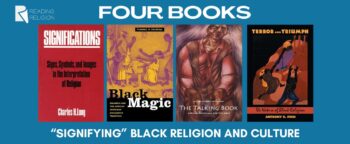
By Juan Floyd-Thomas At the time of this writing, we are facing an unparalleled onslaught of reactionary forces vigorously seeking to circumscribe, diminish, and even erase all markers of African… READ MORE
October 15, 2025
Dear Reading Religion Subscribers, New this October from Reading Religion: a “Four Books” essay on Buddhist modernism, a new reading list that explores magic, horror, and the supernatural, and our latest reviews and titles… READ MORE
October 9, 2025
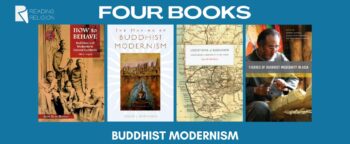
By Jack Meng-Tat Chia Scholars have described the reshaping of Buddhist ideas and practices in relation to Western modernity since the 19th century with terms such as “Buddhist revival,” “modern… READ MORE
September 18, 2025
Dear Reading Religion Subscribers, Here’s the latest from Reading Religion, the American Academy of Religion’s religious studies review site. This month, we feature our latest “Four Books” essay and a reading list in honor of Hispanic… READ MORE
September 15, 2025
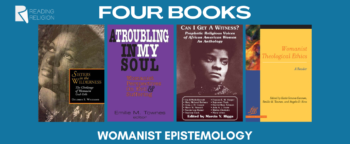
By Karen Jackson-Weaver The opportunity to write about four books that have shaped my scholarly journey invites me to reflect on my doctoral studies at Columbia University, where I interrogated… READ MORE
August 19, 2025
Dear Reading Religion Subscribers, We’re pleased to bring you the latest from Reading Religion, the American Academy of Religion’s online home for scholarly book reviews and essays. This edition features a review of the… READ MORE

August 12, 2025
By Mary Shan Overton With literary and academic voices and perspectives being suppressed in the United States, I have elected to defend books and writers by embracing previously censored texts…. READ MORE

August 5, 2025
Historian Zara Surratt explores how Sugarcane weaves ceremony, oral history, and archival truth-telling into a searing documentary about intergenerational trauma and care.
June 5, 2025
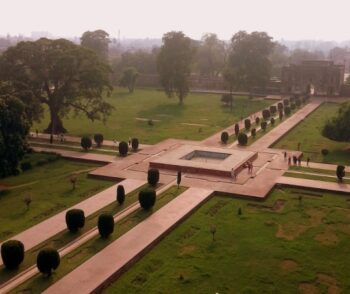
Religious studies, encompassing a broader temporal scale than modernity, should include a spatial analysis of religious practice and production that is geographically and historically inclusive. This essay examines three recent titles that engage meaningfully with spatial dimensions of religion across different times and social and political contexts. The approaches taken in these works are different but offer valuable insights for those looking to understand how religious faiths and beliefs are produced, reinforced, reformulated, and deployed through space.

May 2, 2025
The title Sinners invites a theological reading. Who are the sinners, and what is sin? In a world where whiteness proclaims itself as salvation, Remmick’s declaration—“I am the way”—parodies Christian soteriology while invoking a colonial logic of civilizing mission.
January 30, 2026
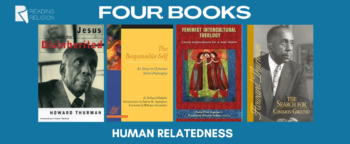
By Jacob Robinson One of the reasons I was drawn into the academic study of religion (and religious ethics in particular) was because I believed the practice of religion made… READ MORE
Recent Comments